How Strong Construction Leadership Improves Project Outcomes
Two projects can start with the same drawings, the same budget, and nearly the same crew, and still end up in completely different places. One comes in ahead of schedule, while the other bleeds money for months while everyone avoids the hard conversation.
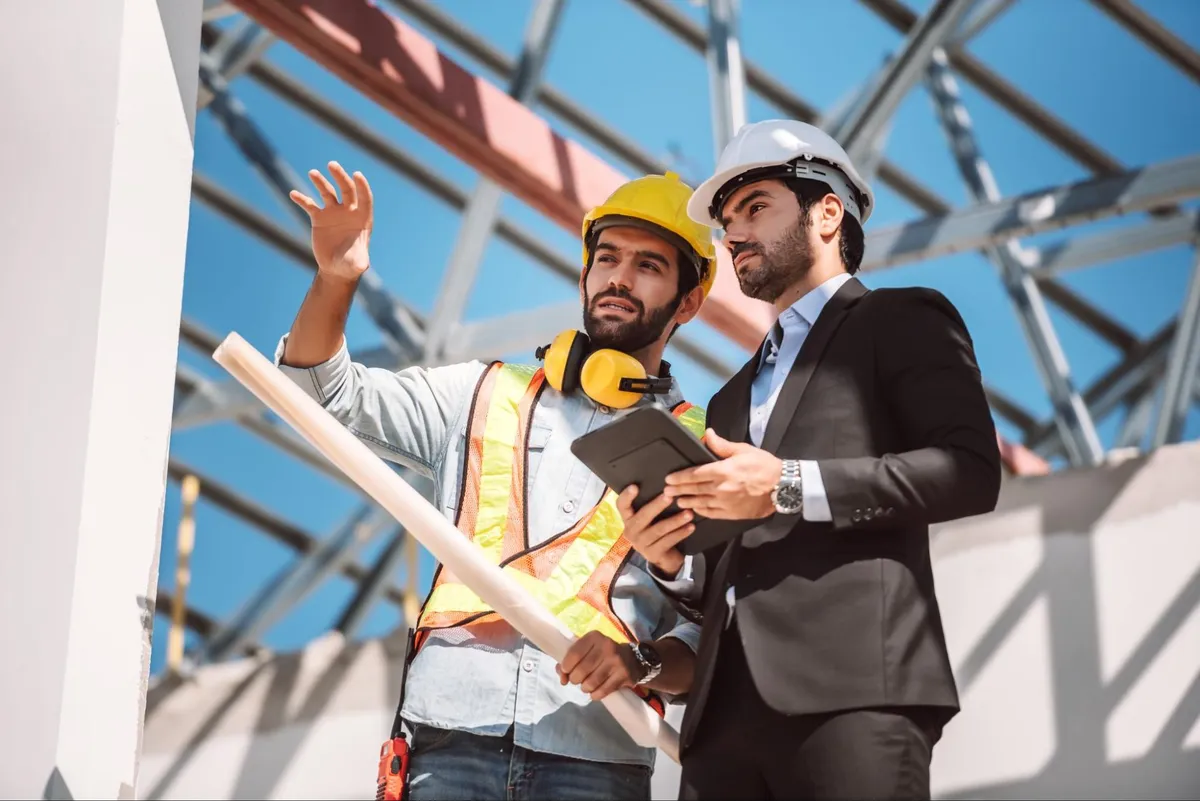
Concrete, weather, and plans matter, but the person running the job is what actually decides how it turns out.
Construction leadership is the single biggest variable in whether a project succeeds. Schedule software and an org chart can only take a project so far. What happens after that comes down to the person carrying the weight. Strong leaders take an average plan and find a way to deliver. On the other hand, the weak ones take a good plan and watch it come apart by the third change order.
This is especially true on the most demanding work, like hospital projects, where the building stays open and there is no room to be wrong. The conditions change from job to job, but the lesson holds: get the leadership right, and everything else has a chance to follow.
The Role of Effective Leadership in Construction Project Success
Leadership shapes project success through three levers you can feel on any jobsite:
How motivated the team is
How disputes get settled
How well the plan holds up when conditions change
Strong leadership is what gets a project delivered on time, on budget, and to the quality the owner is paying for, especially in an industry as complex and fast-moving as this one.
Tight timelines, budget limits, safety exposure, and stakeholders who all want something different are the conditions on every real job. A Gantt chart can't negotiate any of that. People can.
Flexible leadership styles, whether transformational, servant, or transactional, adapt to the demands of a specific project and improve performance:
Transformational leaders lift team engagement, creativity, and flexibility.
Servant leaders build a healthier culture that people actually want to work in.
Transactional leaders keep delivery tight through clear expectations and accountability, which is exactly what a hard milestone or a safety program needs.
Clear communication keeps expectations aligned, keeps teams coordinated, and keeps small misunderstandings from turning into change orders and claims.
That is the whole job of construction project leadership. Keep the people aligned, and the numbers tend to follow.
Why Leadership Matters in Construction
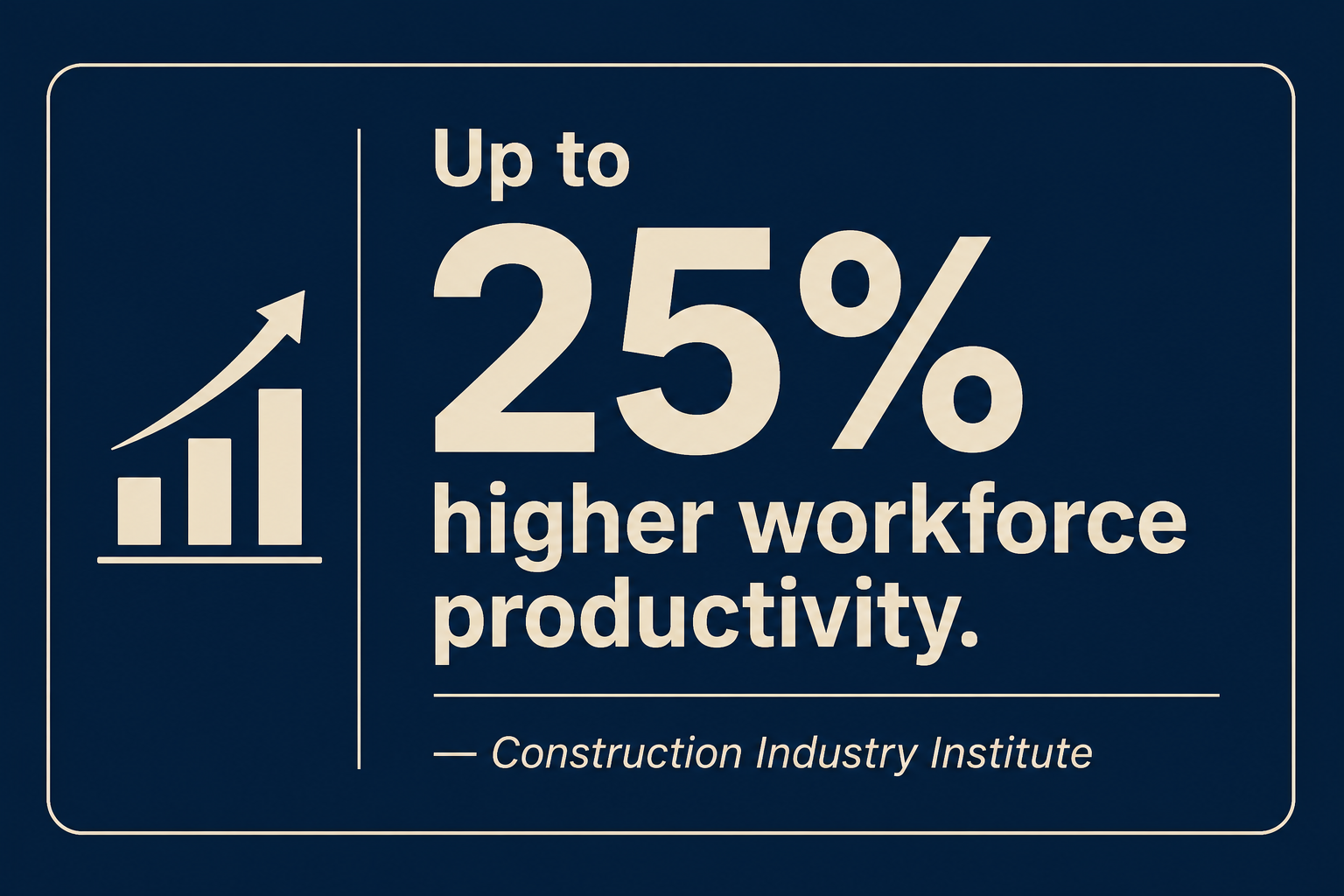
Poor leadership does not stay quiet. It shows up as cost overruns, blown schedules, and a crew that has checked out. It also affects your reputation, which in this business is the only thing that gets you the next job.
Good construction management leadership moves the needle the other way. The productivity gap between a well-led crew and a poorly led one shows up in the field within weeks.
On a project of any size, that swing in productivity is the difference between a fee and a loss.
Here is what strong leadership in construction protects on a live project:
The schedule, because problems get flagged while there is still time to fix them
The budget, because early signals catch cost creep before it compounds
Safety, because a crew that trusts its leader speaks up instead of staying quiet
Quality, because standards hold when the leader holds them
The people, because good ones stay for leaders they respect and leave the ones they don’t.
Trust is the only currency that matters on a job site. Everything on that list runs on it.
What Does Leadership in Construction Look Like Today?
The work is changing every year: new tools, higher expectations for speed and quality, and tighter labor. Even a well-planned project drifts, so the leader needs a current read on where things stand and a steady view of what is coming.
Today, leadership in construction shows up in ordinary moments: decisions that hold up under pressure, jobsite communication that stays clear when things get tense, and delivery that stays controlled even as scope, labor, and pricing move. Those outcomes come from a handful of repeatable habits, practiced every day.
Key Leadership Qualities for Construction Success

Talent gets you noticed, and traits get you results. The leaders I trust on a project share a specific set of qualities, and the good news is that every one of them can be built. These are the construction leadership skills worth developing, whether you are a first-year PM or a director running a program.
Clear communication. The ability to give instructions, ideas, and feedback that land. Not "check the materials," but "verify the concrete quantity against the pour schedule and confirm the mix design." Vague direction is how mistakes get built into a wall.
Sound decision-making. Weighing the risk, gathering the data, pulling in the people who know, and then making the call and owning it. Teams follow leaders who decide.
Adaptability. Scope changes, a submittal comes back rejected, a crew doesn’t show. The leaders who adapt early keep the job stable while everyone else reacts.
A clear vision. Strong leaders see problems while options still exist, and they connect daily field decisions to the owner’s larger goals. When the crew understands how their work affects the outcome, standards hold on their own.
Clear expectations. Roles, reporting, and accountability defined early and reinforced often. When the field and the office are working off the same expectations, rework and disputes drop.
Leading by example. This is the trait that makes the rest believable. Show up on time. Follow the safety plan. Take responsibility when it goes wrong. A crew watches what you do, not what you say. Leadership is an action, whatever the title says.
None of these traits are innate. They are learned the hard way, on real projects, usually after a few painful lessons. That is exactly why they can be taught.
Leadership in Action: Building a Better Future

Every construction project reaches a point where the plan alone is no longer enough. Schedules slip, costs rise, communication breaks down, and trust starts to disappear. Those moments reveal whether leadership is strong enough to steady the team or whether problems will continue to grow.
A new schedule or another meeting won't fix that. Honest communication, consistent follow-through, and leaders who create an environment where people can raise concerns, solve problems, and stay accountable will. When trust is rebuilt, teams regain confidence, collaboration improves, and projects have a much better chance of recovering.
That is what leadership does. It changes how the people already on the job show up, without adding labor or shortening the drawings.
This is the difference between building projects and building the people who build them. Get the people right, and the buildings take care of themselves. Do it consistently, and you build something that outlasts any single project. That is what "build a better future" means in this trade: growing leaders who grow other leaders and passing on more than you were handed.
Build trust, build teams, build partnerships, and build legacy. Those four principles are how strong construction leadership is built, one project at a time.
Frequently Asked Questions
You may also ask:
How does leadership affect project success?
Leadership drives project success mainly through people. It sets the motivation of the team, decides how quickly disputes get resolved, and determines how well the plan holds up when conditions change. Strong leaders catch risks early, communicate clearly, and keep everyone pointed at the same goal, which is what delivers a project on time, on budget, and at the quality the owner expects.
Why is leadership important in construction?
Construction is complex, high-stakes, and unpredictable, with tight timelines, safety exposure, and many stakeholders. Strong leadership in construction is what holds all of that together. Weak leadership shows up as cost overruns, delays, and disengaged crews. Strong leadership protects the schedule, the budget, safety, and quality at the same time.
What are the benefits of strong leadership?
Higher productivity, fewer disputes and less rework, better safety performance, stronger owner relationships and repeat work, lower turnover, and a healthier team culture. Over time, it also builds the next generation of leaders, which is the benefit that compounds.
What are the 6 key points to strong leadership?
Five hold up across every project:
Communicate clearly and often, and listen more than you talk.
Make sound, timely decisions and own the outcome.
See problems early and connect daily decisions to the bigger goal.
Set clear expectations for roles, standards, and accountability.
Stay adaptable and manage risk before it becomes a crisis.
Lead by example and build trust through consistency.
Do those five well and most of the other problems on a job get smaller.
Where to Go Next
If you lead construction work, or you are on your way there, the skills that got you here are not the same ones that will carry you into leadership. The industry teaches you to build. Almost nobody teaches you to lead. That gap is exactly what my book, Building People Who Build Hospitals, is written to close: how to build trust, teams, partnerships, and legacy on the most demanding projects in the industry.
If you want to see these habits under real pressure, read our post Hospital Shutdown Planning: The Definitive Guide. A shutdown is leadership with the safety net removed, and it is where these traits either hold or fall apart.
And if you want to build these skills across your whole team, that is what the Building People Academy does. We don’t just train your people. We change how they show up.
Start with the book. Everything else builds from there.