
What Is Healthcare Construction? A Field Guide From Inside a Working Hospital
It is 5:30 in the morning on the fourth floor of a hospital that never closed. On the other side of a temporary wall, the patient rooms are occupied. A nurse pushes a med cart past our containment barrier without slowing down. Two floors below, an operating room is being prepped for a seven o'clock case. And my crew is about to open a ceiling above a corridor that has to stay clean, quiet, and fully running the entire time we work.
Nobody in that building can tell we are there. That is the point.
That morning is what healthcare construction actually is. The work happens a few feet from patients on the hardest days of their lives, and it finishes without anyone on the other side of the wall knowing you were ever there.
What Is Healthcare Construction?
Healthcare construction is the design and building of medical facilities such as hospitals, clinics, surgery centers, imaging suites, laboratories, and long-term care buildings, where the work often happens inside a facility that stays open and treats patients the whole time. It covers new medical building construction, renovations inside operating hospitals, and full multi-building capital programs.
What separates it from standard commercial work is the stakes. The building itself functions as a piece of life-safety equipment, so a mistake can put patients at risk rather than just a schedule.
I have worked both sides of the table. First, I was the general contractor building the work, and later I was the owner's representative protecting the client paying for it. That adds up to more than $1 billion in work across over 17 major healthcare facilities, and most of it happened while the building stayed open.
Building hospitals is the most demanding environment in the industry, and the reasons come down to four things that do not exist in a standard commercial job.
Building Inside a Hospital That Never Closes
Most commercial construction happens in an empty box, and the tenant moves in after you leave.
Healthcare construction rarely gives you that. You are working above, beside, and below patients, staff, and families who are receiving medical care. The hospital does not shut down for your project, because it keeps admitting, operating, and discharging while you build.
That single fact changes everything about how you sequence the work. You plan around shift changes, patient transport routes, and an emergency department that cannot lose access for a single minute. You phase a renovation so one wing stays open while you gut the one beside it. Material movement is often scheduled during lower-traffic periods to minimize disruption to patient care.
When the work touches a live system, the sequence gets written down before anyone touches a tool. We call that document a Method of Procedure, or MOP, and it records every valve, every breaker, and every backout step, so that if something goes wrong at two in the morning nobody is improvising.
The measure of success in this work is strange. If the clinical staff never had to think about you, then you did the job right.
Life-Safety Systems You Cannot Afford to Get Wrong
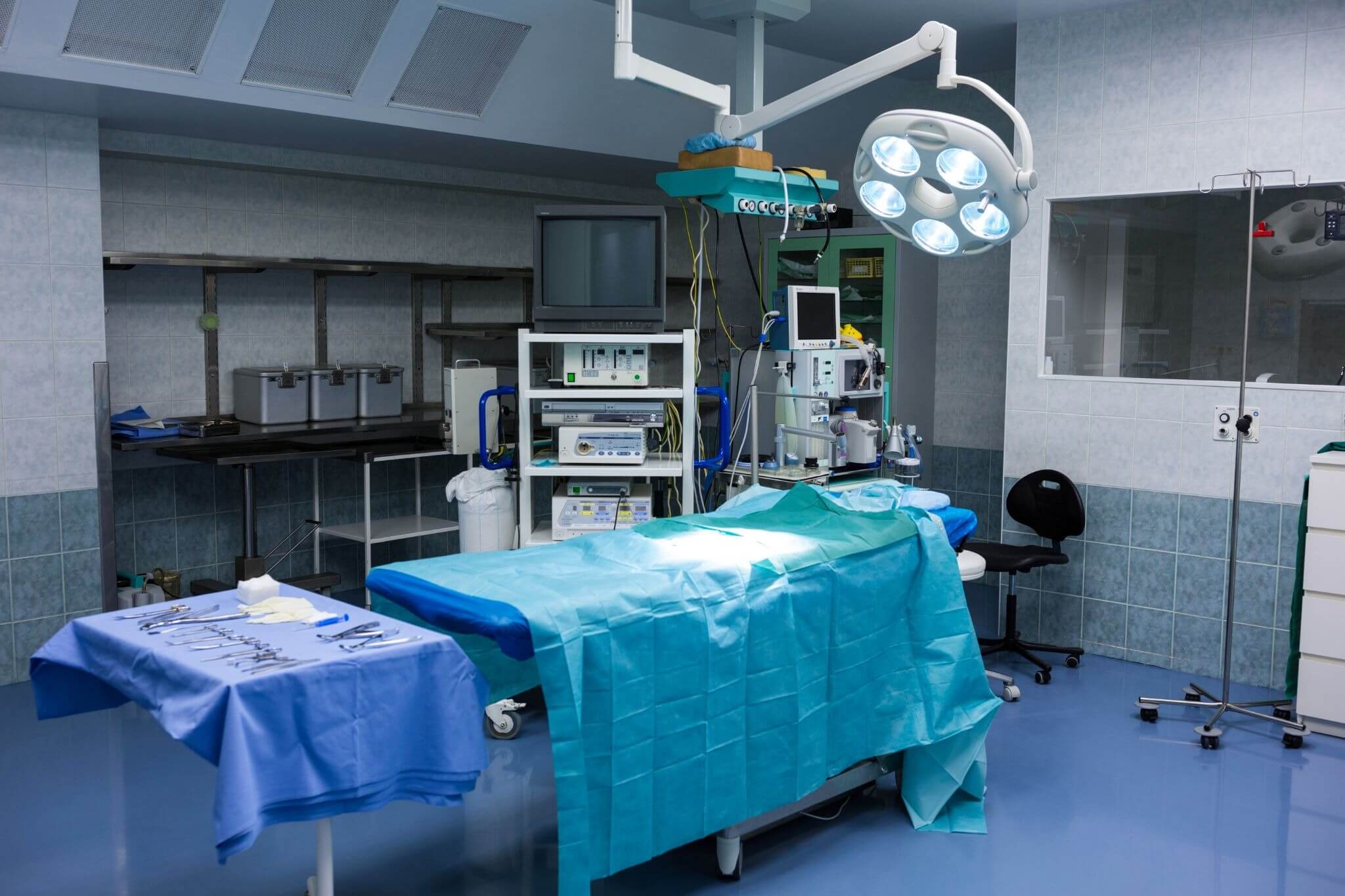
In a hospital, the systems inside the walls keep people alive. Emergency power, fire alarm and suppression, nurse call, and the smoke compartments and fire-rated barriers that hold a fire back long enough to move patients who cannot move themselves.
In commercial work, a fire-rated wall is a code requirement. In medical facility construction, that same wall is the difference between evacuating a floor and defending in place, because half your patients are on ventilators and cannot be moved quickly. So you verify every penetration, you document every barrier, and you do not close a ceiling until the life-safety work behind it has been inspected and signed off.
The obligation does not pause while you build, either. When construction temporarily compromises a life-safety feature, the hospital puts Interim Life Safety Measures in place to cover the gap, which means your schedule and your barriers become part of the facility's compliance posture rather than just your own.
Get this wrong and the failure does not show up on a punch list.
Medical Gas: The Invisible Utility
Behind the headwall of every patient room runs a system most people never think about. Medical gas covers oxygen, medical air, vacuum, and nitrous oxide, and those lines are every bit as critical as electrical and plumbing.
They are also held to a standard most commercial trades never encounter. NFPA 99, the Health Care Facilities Code, requires installers to hold ASSE 6010 certification, and brazing procedures have to be qualified under ASME Section IX or AWS B2.2. Before a system goes into service, an independent verifier who is certified to ASSE 6030 tests and documents it. None of that is optional, and none of it can be caught up after the fact.
You do not guess with medical gas, and you do not improvise a tie-in on a Friday afternoon. A cross-connected line or a contaminated system is a direct patient-safety event, not a warranty item. Building hospitals means treating that pipe with the same respect the clinical team gives the oxygen flowing through it.
Infection Control: The Discipline That Runs Every Day
Construction dust can pose serious risks to immunocompromised patients if infection-control procedures fail. That surprises people coming from commercial work, and the numbers explain why.
Demolition and renovation release airborne fungal spores, and Aspergillus is the organism the industry watches most closely. Invasive aspergillosis carries a mortality rate of roughly 50%, and that figure approaches 100% when the diagnosis is delayed or missed. For a patient who is already immunocompromised, a failed containment barrier is not an inconvenience.
That is why every project runs under an Infection Control Risk Assessment, or ICRA. The Facility Guidelines Institute has required one since 1996, and the CDC added its own guidance in 2003. In 2021 the American Society for Health Care Engineering published ICRA 2.0, which moved all patient care areas into the high-risk category, placed any invasive patient care in the highest-risk category, and added a fifth class of precautions above the four that existed before.
The assessment drives everything downstream. It sets your containment barriers, your negative-air machines, your HEPA filtration, your sticky mats at the door, and the route your crew walks to the dumpster so they never cross a patient corridor covered in drywall dust.
Infection control is not a box you check at the start of a job. Barriers get inspected. Pressure gets monitored and logged. And when a containment fails, you stop the work, you fix it, and you do not restart until it holds.
Why the Difference Matters
Standard commercial construction rewards speed and cost control. Medical building construction rewards those things too, but only after safety, continuity, and coordination have been locked down.
The owner's rep, the facilities director, and the chief engineer are not asking whether you can build it. They are asking whether you can build it without disrupting care. That is the whole game, and it means delivering the project and protecting the mission of the building at the same time.
It is also why these disciplines transfer so well. Data centers, laboratories, and manufacturing floors all share the same core problem, which is that the space cannot go dark while you work inside it. A team that has learned to build in an occupied hospital already knows how to do that.
Key Takeaways
Healthcare construction is the building and renovation of medical facilities, usually while the facility stays open and continues treating patients. The building itself is life-safety equipment, so errors carry clinical consequences rather than only schedule and budget consequences.
Medical gas work is governed by NFPA 99 and requires certified installers, qualified brazing procedures, and independent third-party verification. Infection control runs on a formal ICRA and is a daily discipline rather than a one-time approval.
The same rigor transfers directly to data centers, labs, and any occupied mission-critical environment.
Frequently Asked Questions
What counts as a healthcare construction project?
New hospitals and clinics, renovations inside operating facilities, surgery and imaging centers, laboratories, and multi-building capital programs all count. If patients or clinical operations are affected by the work, it is healthcare construction.
How is healthcare construction different from commercial construction?
The facility usually stays occupied and running throughout the project. You have to protect life-safety systems, medical gas, and patients from infection risk while you build, which makes the margin for error far smaller.
What is ICRA in hospital construction?
ICRA stands for Infection Control Risk Assessment. It governs containment, air filtration, and crew routing in order to keep construction dust and contaminants away from vulnerable patients, and it has been required by FGI guidelines since 1996.
Do you need special certifications for medical gas work?
Yes. NFPA 99 requires installers to hold ASSE 6010 certification, brazing procedures must be qualified under ASME Section IX or AWS B2.2, and an independent ASSE 6030 verifier has to test the system before it is connected for use.
What are Interim Life Safety Measures?
They are the temporary protections a hospital puts in place when construction compromises a life-safety feature such as a fire barrier or an exit path. They keep the facility compliant and the patients protected while the permanent work is being completed.
Does healthcare construction experience apply to other industries?
It does. The discipline required for occupied, mission-critical environments transfers directly to data centers, laboratories, and manufacturing.
Who protects the owner's interests on a healthcare project?
The general contractor is accountable for delivering the work defined in the contract. An owner's representative sits on the other side of that table and is accountable to the owner, which means verifying quality, questioning change orders, and reading the schedule for what it is not saying.
Where to Go Next

Healthcare construction comes down to one thing, which is delivering the project without ever putting the mission of the building at risk. The technical side of that is hard. The leadership side is harder, and it is the part nobody trains you for.
Maybe you are stepping into this work as a project manager, or as an owner's rep, or as a facilities leader who owns the building while someone else builds inside it. In every one of those seats, how you lead the people on the job matters as much as how you sequence the work.
That is what my book,Building People Who Build Hospitals, is about. It covers how to lead the people who deliver the most demanding projects in the industry without dropping the mission of the building.
If your next project involves working inside a live facility, start with the discipline that makes or breaks it and read Hospital Shutdown Planning: The Definitive Guide. A perfectly boring shutdown is not an accident. It is the result of exhaustive preparation.
And if you are the one who has to answer for the outcome, that is the work we do at Building Construction People, covering owner's rep, program oversight, and critical shutdown planning.
Start with the book. Everything else builds from there.